

America's Got Talent on NBC
NBCUniversal Media, LLC
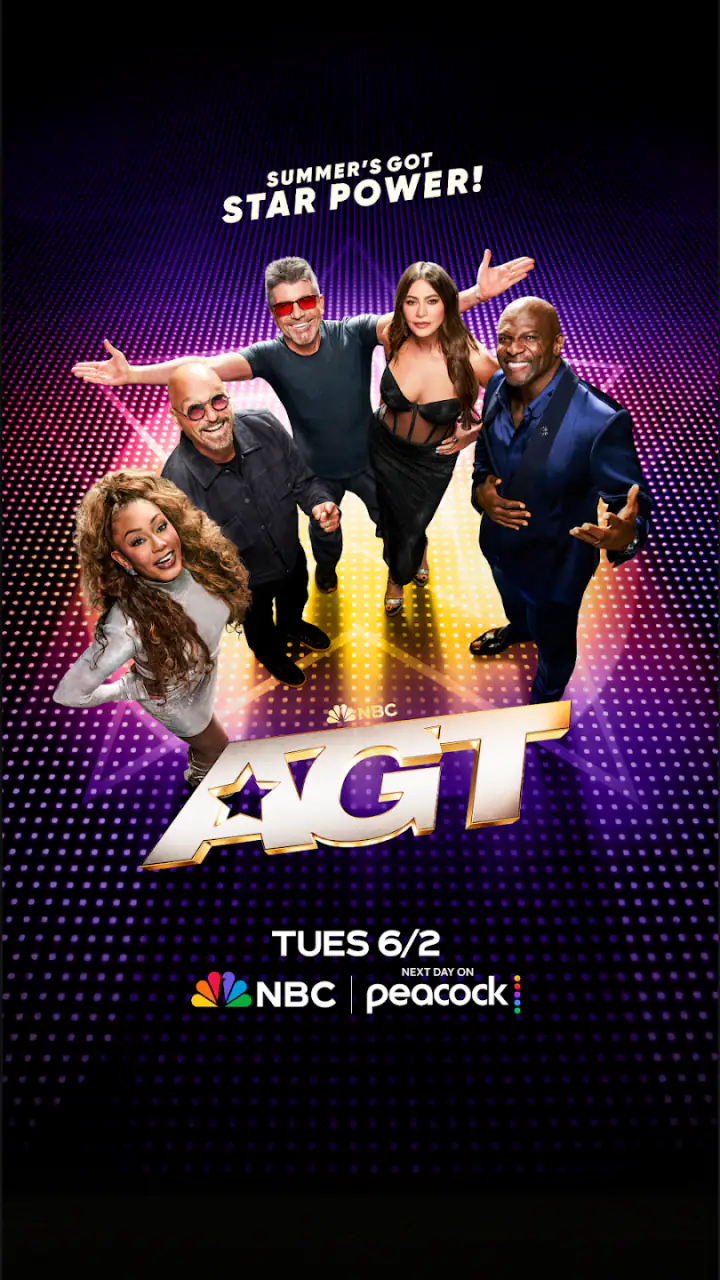
I like entertainment apps that give me a quick way into a show without making me work through a complicated setup, and the America's Got Talent app follows that idea closely. It is a free entertainment app from NBCUniversal Media, LLC, built around the talent competition and its current Season 21 presentation with Simon, Sofia, Mel B, Howie and Terry. After spending time with it, I see it as a useful companion for viewers who already follow the program, rather than a complete replacement for every way of watching it.
The first thing to understand is its role. This is not a general streaming service with a huge library, and it is not a voting game or a talent-training tool. Its value comes from keeping the America's Got Talent experience close at hand. That makes it especially convenient when I want show-related entertainment in short sessions, when I am checking in around an episode, or when I want a more focused alternative to browsing a large television catalog.
How I use the app from the first launch
My normal workflow is simple. I open the app when I am in the mood for America's Got Talent, look through the available show material, and decide whether I want a quick update or a longer viewing session. That narrow purpose is a strength because the app does not make me search through unrelated genres before reaching the program I actually came to see.
The app is listed as free, which makes trying it straightforward. I would still treat “free” as an invitation to explore rather than a promise that every part of the wider television experience works exactly like a paid, all-access service. The practical question is whether it fits the way you watch. If you mainly want a dedicated doorway into this one show, the low barrier is appealing. If you expect a broad on-demand catalog, you may find the scope limited very quickly.
For a realistic everyday example, imagine that I am waiting for a friend and have only a few minutes. Instead of opening a general streaming app and scrolling through recommendations, I can use this focused app to stay connected with the show. Later, when I have more time, I can return to it for a deeper session. That repeatable habit—short check-in first, longer viewing later—works better here than trying to force the app into the role of a complete entertainment hub.
Related News

Why WhatsApp Messenger Still Makes Everyday Communication Feel Easy

Jurassic World: The Game Is the Better Dino Tycoon for Strategic Players

Threads in Real Life: Who Should Join, Lurk, or Leave

How SHEIN Turned Shopping Into an Endless Content Feed

How to Make Fortnite Feel Smarter on Mobile

Should You Switch to Microsoft Outlook on Mobile?
The age rating is Everyone, so the app is positioned for a broad audience. That is useful for households where different people follow the program together, although parents should still use their own judgment about the specific performances and show moments they consider suitable. The rating makes the app approachable, but it does not remove the need to think about the content surrounding a televised talent competition.
One detail I appreciate is that the experience feels purpose-built around a recognizable television brand. The people associated with the current season—Simon, Sofia, Mel B, Howie and Terry—are part of the app’s identity, so it feels more like a companion to the program than a generic video shelf. That matters when I want the atmosphere and personalities of this particular show rather than another random collection of clips.
What to check before making it your main viewing tool
I would begin by deciding what you expect from it. If your priority is staying close to America's Got Talent, the focused layout is likely to feel comfortable. If your priority is watching many unrelated series, comparing several networks, or managing a broad personal library, a larger streaming alternative will usually be better. The app’s specialization is its main convenience and its main limitation at the same time.
Gallery
I also recommend checking the current app behavior on your own device before planning a long viewing session. The listed minimum operating-system requirement is version 10, and the current version is 1.11.4. That gives me a clear compatibility checkpoint: I would confirm that my phone or tablet meets that requirement, update the operating system if appropriate, and make sure the app itself is current before blaming playback or navigation on the service.
This is a small but important habit. Entertainment apps are often used casually, so people tend to install them moments before a program starts. That is exactly when an outdated operating system or old app version becomes frustrating. A quick compatibility check earlier in the day can prevent the worst kind of disappointment: discovering a problem when everyone else is ready to watch.
Settings and habits that make the experience smoother
I would not approach this app by changing every available option immediately. Instead, I would spend a minute looking for the controls that affect the way I actually use it. The most useful settings are the ones that reduce interruptions, clarify what the app is showing me, and make it easier to return to the program without repeating the same search.
My first check would be notification behavior. A show companion can be helpful when it reminds me about relevant activity, but alerts can become noise if I already know when I plan to watch. I prefer to keep only the notifications that support my routine and silence anything that pulls me into the app when I am busy. This is not about disabling the app’s personality; it is about making it serve my schedule instead of competing with it.
Next, I would look at playback-related preferences and device behavior. On a phone, I am more conscious of how long I plan to watch and whether I am using a mobile connection. On a larger screen, I am more likely to settle in for a full session. The best setup is therefore not identical for everyone. A viewer who uses the app for quick visits should keep the interface simple, while someone who watches regularly should arrange their routine so returning to the show takes as few steps as possible.
Another worthwhile habit is to use the same entry point every time. If I open the app through a random notification one day and a different route the next, the experience can feel less predictable. I prefer to launch it directly, go to the America's Got Talent area, and decide from there. Repeating that path turns the app into a dependable part of my viewing routine rather than another place where I have to hunt for content.
I would also pay attention to account and access prompts as they appear, without assuming that every viewer will see the exact same screen. When an app is connected to television content, access can depend on the viewing arrangement, device, or current availability. The practical approach is to read each prompt carefully and avoid rushing through it just because I want to start watching. That saves time later if I need to revisit an access choice.
Faster patterns for regular viewers
Experienced users usually gain speed through repetition rather than secret tricks, and that is how I would use this app. I keep a clear purpose for each visit: checking the show, watching available material, or returning to something I already intended to see. That sounds basic, but it prevents the common mistake of opening an entertainment app without a plan and then leaving after several minutes of aimless browsing.
A useful pattern is to separate discovery from viewing. When I have only a short break, I do not spend that entire break deciding what to watch. I make a quick choice and start. When I have more time, I can explore the surrounding show material. This approach is particularly suitable for a focused app because the catalog is tied to one program; the challenge is not finding thousands of choices, but choosing how much attention I want to give the show at that moment.
I also recommend using a consistent “return point” in your own routine. For me, that means remembering whether I last opened the app for a current-season check-in, a favorite performance, or general show browsing. The app itself does not need to become a complicated personal organizer. I can make the experience faster simply by knowing why I am returning and going straight toward that goal.
For families or friends who watch together, another effective pattern is to agree on when the app is used for shared viewing and when it is used for individual catch-up. That avoids a common source of friction: one person opening show material while another is trying to preserve the surprise of a later group session. The app supports the shared interest, but the household still benefits from a little coordination.
There is also a practical trade-off between convenience and immersion. On a phone, the app is ideal for keeping up with the show while traveling or waiting. On a larger display, the same material can feel more like a proper viewing session. I would not judge the app solely by the smallest screen I use, because the best experience depends on whether I am filling a spare moment or intentionally watching with other people.
Where the focused design reaches its limits
The biggest limitation is the narrow subject matter. A dedicated America's Got Talent app can make the program easier to reach, but it cannot provide the variety of a broad entertainment platform. When I want comedy, drama, documentaries, sports, or a different competition, I need another service. That is not a flaw in the show focus, but it is an important reason not to treat this as my only entertainment app.
I would also avoid assuming that a companion app replaces the main television experience in every situation. Some viewers want the full rhythm of an episode on a large screen, with everyone watching together and no temptation to switch tasks. Others prefer short clips or quick visits. This app makes more sense for the second group, or for viewers who want an additional way to stay connected between longer sessions.
Another limit is that focused entertainment apps can feel less valuable when my interest in the featured show fades. If I am deeply invested in the current season, the specialization feels efficient. If I only watch occasionally, the app may spend more time sitting unused than serving me. I would therefore install it for a clear reason—regular America's Got Talent viewing—not simply because I recognize the title.
Performance expectations should also be realistic. Video-focused use depends on the device, connection, and surrounding conditions, so I would not plan an important shared viewing session without testing the setup first. A short trial on the intended screen is more useful than discovering at the start of an episode that the phone, tablet, or network is not comfortable for extended use.
The app’s public reception is encouraging but not flawless: it carries an average rating of 4.2 from around twelve thousand ratings, alongside roughly three thousand four hundred written reviews. I read that as a sign that many viewers find the experience worthwhile, while also remembering that ratings combine different devices, expectations, and viewing habits. A person looking for a show-specific companion may be satisfied where a person expecting a complete streaming replacement is not.
Who should install it, and who should skip it?
I would recommend it to someone who follows America's Got Talent and wants a direct, focused way to engage with the program. It is also a sensible choice for viewers who enjoy short entertainment sessions, households that share an interest in the show, and fans who prefer a dedicated app over searching through a large general-purpose service.
I would be more cautious recommending it to someone who watches only a handful of episodes, dislikes installing single-show apps, or expects one application to cover every entertainment need. In those cases, the usual television app or broader streaming service may be more practical. The better option depends on whether convenience around this particular program matters more than catalog breadth.
The app is also less suitable for people who want extensive customization, deep organization tools, or a sophisticated media library. Its appeal is directness, not complexity. I would not choose it because I want to manage a large collection; I would choose it because I want America's Got Talent to be easy to reach.
With more than one million installs, it has clearly attracted a substantial audience, but popularity alone does not decide whether it belongs on my device. The deciding factor is frequency of use. If I return to the show regularly, the focused access earns its space. If I open it once and move on, a general entertainment service may be the cleaner choice.
My final view after building a repeatable routine
After using it as a show companion rather than pretending it is an all-purpose streaming platform, I find the app easy to understand and reasonably useful. Its free availability, Everyone age rating, recognizable season focus, and direct entertainment purpose make it approachable. The current Season 21 presentation, with Simon, Sofia, Mel B, Howie and Terry, gives it a clear identity instead of leaving it as a vague network-branded utility.
My strongest recommendation is to build a simple routine around it: verify compatibility, control notifications, choose the right screen for the length of the session, and open the app with a specific goal. Those habits make a bigger difference than endlessly searching through settings. They also reveal the app’s honest position: it is a convenient home for fans of one major talent show, not a substitute for every other way of watching television.
My verdict is that this is best for committed America's Got Talent viewers who value quick, focused access. I would install it for the show, keep my expectations centered on that purpose, and use a broader streaming alternative whenever I want variety. Used that way, it feels practical rather than excessive, and the strong audience response supports its place as a worthwhile companion for the right viewer.
FAQs for America's Got Talent on NBC
What is America’s Got Talent on NBC?
America’s Got Talent is NBC’s talent competition series featuring singers, dancers, comedians, magicians, variety performers, and other entertainers of all ages. The official app and NBC digital platforms generally provide access to show information, episode details, clips, contestant highlights, schedules, and other program-related content. Availability may vary depending on your location and the current season.
Can I watch full episodes of America’s Got Talent in the app?
The NBC app may allow eligible users to stream full episodes, previews, highlights, and selected clips from America’s Got Talent. However, access usually depends on your country, television provider, account status, and the network’s current streaming rules. Some content may require signing in with a participating TV provider, while other videos may be available without a subscription.
Is the America’s Got Talent app free to download and use?
Downloading the NBC app or accessing America’s Got Talent content is generally free, but that does not necessarily mean every feature is free. Full episode streaming can require a participating cable, satellite, or live-TV provider account, and mobile data charges may apply when watching over a cellular connection. Check the app store listing and NBC’s current terms before using it.
Can I vote for America’s Got Talent contestants through the app?
Voting availability depends on the season, episode schedule, and your location. When official voting is open, NBC may provide voting instructions through its website, app, or other approved platforms. Voting windows are limited and may close quickly after a performance or episode. Read the displayed rules carefully, because eligibility, vote limits, and supported regions can change.
What devices and accounts are supported by America’s Got Talent on NBC?
America’s Got Talent content may be available through the NBC app on compatible Android and iOS phones or tablets, as well as through supported web browsers and connected-TV platforms. You may need an NBCUniversal profile for certain features and a participating TV provider for locked episodes. Compatibility can differ by operating-system version, device model, and geographic region.
Pros
- Free to watch with participating TV provider access
- Includes clips
- auditions
- and memorable performances
- Supports casting to compatible TVs and streaming devices
- Offers notifications for new episodes and featured acts
- Covers judges
- contestants
- and behind-the-scenes content
Cons
- Full episodes may require a participating cable or live TV subscription
- Content availability can vary by location and licensing rights
- Video quality depends heavily on your internet connection
- Some features may require creating or linking an NBC account
- Ad breaks can interrupt viewing
- especially during longer episodes


